The Birth of a Coin
How They Were Made
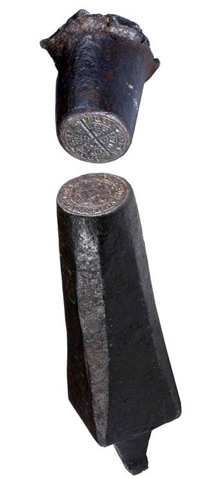
The dominant method of coin production in the Middle Ages was hammering. This minting process consists of a metal blank being placed between two stamp-like dies and then hammering to imprint the design into the blank. The die shown here is from 14th century England and it is "handheld"– the die would have been manually held in place and struck oher the top with a hammer. If we imagine this process it is tedious, difficult and needless to say, dangerous. Regardless, coins were produced in huge quantities using this technique and reproduced with each new ruler. This goes to show just how crucial coins were to Medieval life. (1)
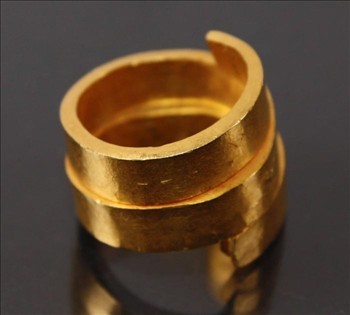
The blanks would be produced from ingots, masses of metal that were made to be melted down and molded into jewelry or coinage. Ingots could take many forms, often an unadorned lump, but the gold ingot shown here has been bent into a spiral shape. This suggests that it may have been strung and carried around. We can tell that pieces have been broken off from the ends, so it was probably used to produce something small before being lost or abandoned.
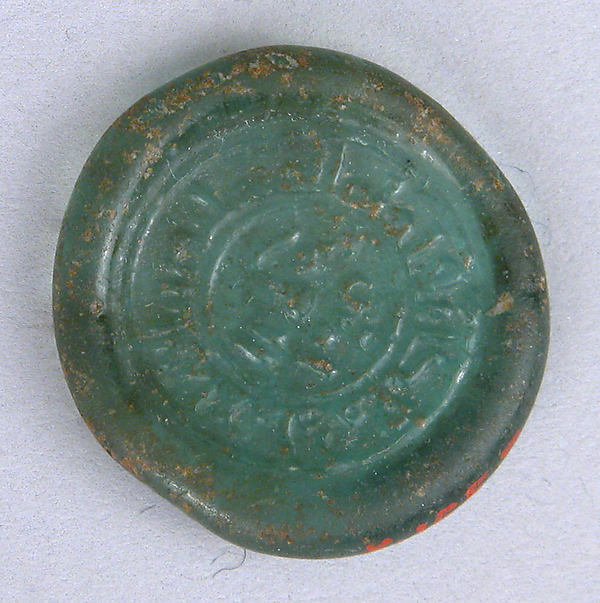
Coins were classified by metal, size, and weight. Different coin values, in addition to having different appearances and material compositions, were separated by standardized weight values. Coin weights could be used to monitor these. Glass coin weights like the one shown were prevalent in the Medieval Islamic world and would be used in coin production as well as the marketplace, for merchants to check that they were receiving the correct payment. (2)
1)D. Sellwood, "Medieval Minting Techniques," The British Numismatic Journal 31 (1962) p. 58-60.
2)Noorah Al-Gailani, "Glass weight," Discover Islamic Art, Museum With No Frontiers, accessed 9 Nov 2016, http://www.discoverislamicart.org/database_item.php?id=object;ISL;uk;Mus04;18;en.