Overview
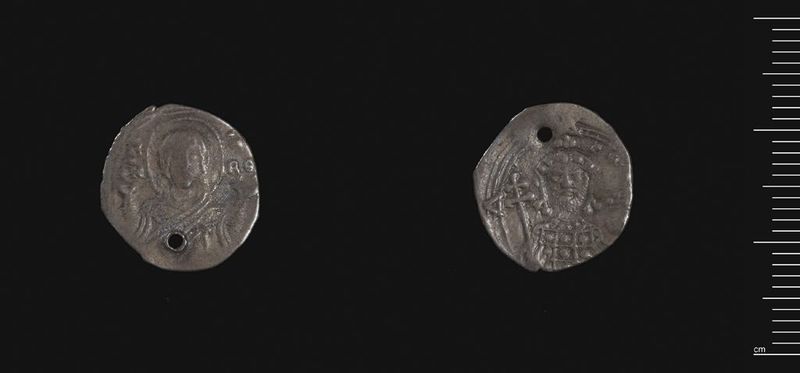
Coins are easy to overlook. They are small and often displayed in expansive arrays, making it seem like they are all the same– if you've seen one, you've seen them all. However, this could not be further from the truth. Look at each coin, consider its purpose, consider the culture it represents and think about all of the hands it has passed through. Coins have perhaps seen more of the Medieval world than any other object and, accordingly, we can use them to uncover details about several aspects of Medieval life.
Coins in their most basic form are tools for transaction, but in the Middle Ages they were much more than this. They were symbols of royal power, instruments of religious devotion, and indicators of political and economic situations. By looking at the production of coins, the ways they were altered, and the ways they were debased, we can construct an image of the Medieval worlds in which they lived.
The objects in this exhibit do not necessarily trace the story of a singular coin but rather the various lifetimes of coins from different locations and centuries. This way, we are able to see how coins and related objects from any background can tell their own story. Whether it be of economics or politics, religion or culture, coins can act as valuable tools for reconstructing history. This exhibit is organized by stages of a coin's life, each section featuring objects that exemplify the importance of coins in discovering the Middle Ages.