Cut, Torn, and Otherwise Broken
Debasement by Clipping
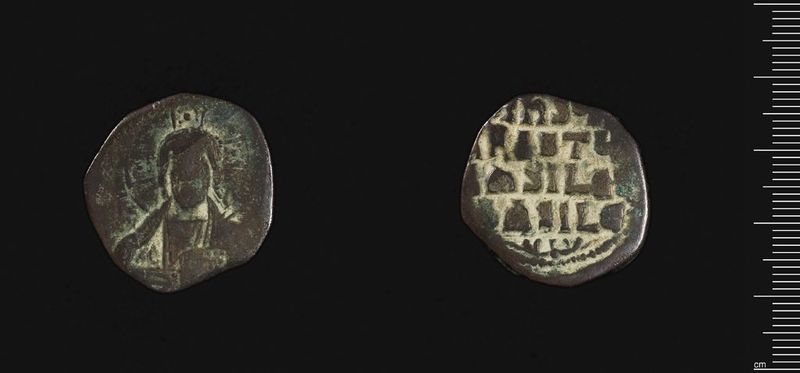
Many of the Medieval coins that survive today have been clipped at some point in their lifetime. Clipping is the practice of cutting away slivers of the perimeter of the coin, leaving it with less value. The clippings could be melted back down and reused or sold. (1) New ingots could be made form this stolen metal and sold to metalsmiths or made into jewelry or counterfeit coins. The Anonymous Follis (dated 976-1035) shown here exhibits heavy clipping, so much that it is impossible to tell what the original text may have said in its entirety.
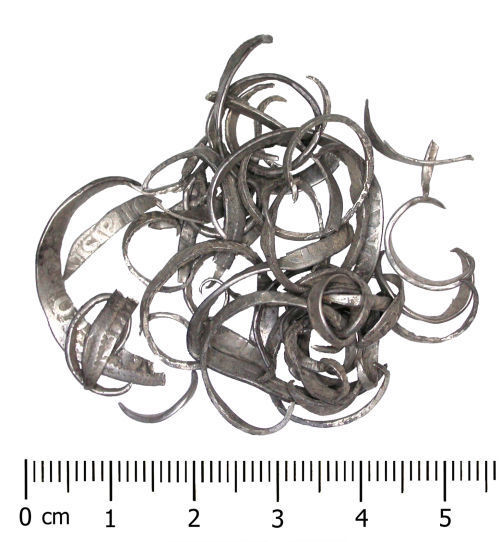
The "Toenail" Hoard is a pile of clippings from 16th-17th century England. Relics like this show us that this method of debasement must have been systematic– clippings were taken and stored in bulk, probably to be able to sell large pieces of metal. It is possible that a whole underground economy existed around the practice.
Broken for a Cause
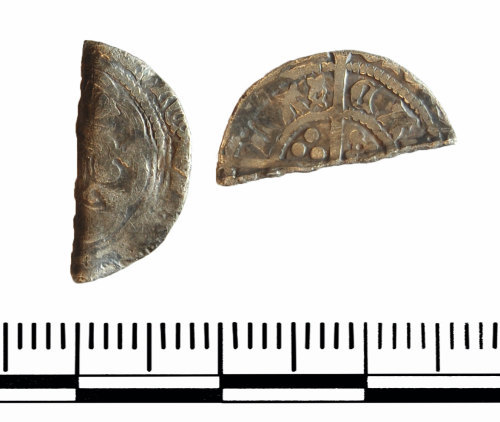
This coin, dating from the 15th century and issued under Henry IV, has been folded in half and broken upon unfolding. This is actually evidence of a widespread devotional practice, pointing us again toward the highly religious nature of the Middle Ages. In Medieval England, coin folding was a gesture of deep prayer and, according to legend, miracle working. There exist various accounts of a coin-bending prayer healing illness, reviving the dead, or stopping violent storms at sea. Coins were also placed in graves at times, and there are instances where these have been folded as well. (2)
1)"What is Coin Clipping?" History House, accessed 5 Dec. 2016. http://www.historyhouse.co.uk/articles/coin_clipping.html
2) Kellehr, Richard. "Interpreting Single Finds in Medieval England- The Secondary Lives of Coins." Academia,edu, accessed 6 Dec. 2016. https://www.academia.edu/1795917/INTERPRETING_SINGLE_FINDS_IN_MEDIEVAL_ENGLAND_-_THE_SECONDARY_LIVES_OF_COINS?auto=download