Seal of Constantine
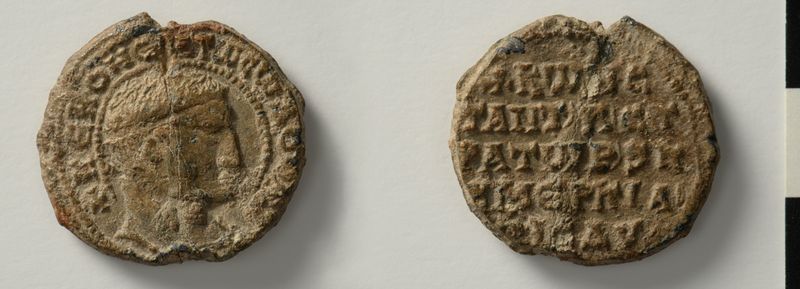
A tenth century Byzantine lead seal of an individual named Constantine, an imperial strator and kommerkiarioi of the West during his time. A depiction of an athlete with a broad neck and straight nose wearing a crown is presented on the obverse of the seal, and an inscription written in Greek (which can be read as: Lord help your servant Constantine, Imperial strator and kommerkiarios of the West) on the reverse of the seal. This seal can be dated some time around the 10th century and was created in Eastern Europe during the Byzantine Period, more specifically during the reign of Constantine VII who ruled from 945 A.D. and 959 A.D.
Byzantine seals were more than often made from lead, (but could be made from gold, bronze, or silver) and would begin as two blank rounded discs of whatever material used to make them in slate molds. Each blank would have a hollow channel running through the center, which would allow for the string to be threaded to the document. pressed against the strings that were attached to the document, letter, or paper they were meant to secure. The particular design of the specific seal would be carved on a pair of dies. A bulloterion, a form of pliers would then be used to held these two dies. Now that these pliers held the images or writing ingrained in them, they would then be pressed on the two lead circles together in order to give the seal its custom and unique depiction. The striking of the seal would also help the channel or center of the blanks collapse around the string.
Once made, this seal (and many others like it) would serve a dual purpose: to verify and secure the contents which it held. Like other Byzantine seals, this seal was used to verify that the documents they were sent with were authorized and came from the individual from which it stated it was from. It was a way to prove that the contents that the seal contained had not been unsealed or tampered with. Essentially, lead seals were used to lock official and private correspondence as well as to authenticate documents. The use of seals became a form of document security and way for individuals to present their status and repute in the Byzantine society. These included individuals such as the ones who played roles in the Church as well as higher status individuals, such as those in the bureaucracy of the Byzantine Empire. This lead seal was used by a government official in the West of the Byzantine Empire, particularly around the Balkan Peninsula.
The choice of the inscription on the seal would have been something personal to the individual who made the seal as well. In this case, the choice the depiction of an athlete reflects the more secular aspects present in the Byzantine Empire, aspects this individual might have enjoyed or found interesting. Another example of a more secular image on a seal can be seen on the seal below of George imperial spatharios and kommerkiarios of Chalida (his choice being a peacock). However more ofen than not, images pertaining to the Christian faith were present on the seals belonging to different individuals during the Byzantine Period. As shown below, the seal of Klement, imperial spatharios and kommerkiarios of Thessaloncia contained depictions of saints of the Church as it pertained to his profession. The seal of Agallianos, kommerkiarios of Abydos contained a depiction of Saint Nicholas with his hands performing a blessing. Christianity was a very present factor of the individuals who lived during the Byzantine Empire (and throughout many nations during the Middle Ages) and objects used in their daily lives would have reflected this. Thus it is not surprising to individuals such as these would have chosen religious imagery important to them, especially saints specific to their occupation. Continuing on, “Lord help your servant Constantine” is the phrase inscribed on the seal: this personal prayer and invocation on the seal is again reflective of the Christian elements heavy in the Byzantine Empire at this time, and the many similar phrases along the line of "Lord, help your servant" or simply "Lord, help" can in fact be seen on many seals of kommerkiarios and many other high standing individuals who who used seals in the Byzantine Empire (See seals below). This proves not only was this seal a physical object, but rather the choice of art and words inscribed on the seal reveal an aspect of the individual during his or her time, and it is quite evident that Christianity was of upmost important during this era in the Byzantine nation. The words on the seal were not just words, but a prayer to the individual's God to help them in what they did during their life on earth.
Finally, the individual states his status and repute in society as high standing government official: a recipient of the documents the seal held would know exactly who it was coming from, and thus be able to identify based on the seal whether or not it was indeed authentic and if the seal were not broken, know as well the contents had not been compromised.
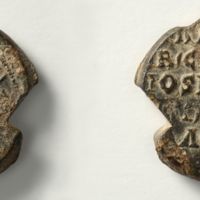
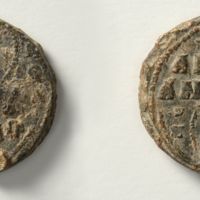
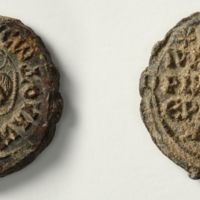
Examples of other seals of Kommerkiarios during the 10th and 11th century. Each seal has a unique design created by the individual who made the seal, and reflective of the Christian elements of this time, as each seal during the Byzantine Empire invoked some sort of Christian imagery or words special to the individual of whom the seal belonged to.