Coins to Invoke the Holy
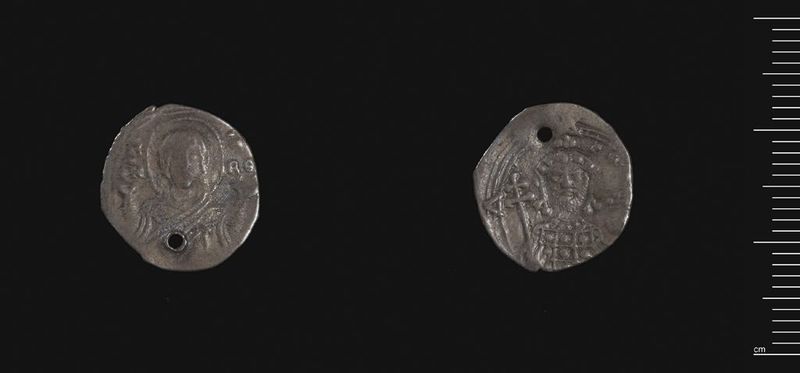
This coin was produced during the reign of Romanos IV, between 1068 and 1071 C.E.. It is a struck silver coin, meaning that the designs were made by hitting a metal die into a silver blank using a hammer. This was a common technique for coin production in the Middle Ages, as it allowed craftspeople to quickly mass produce silver, gold, and copper coins. It is thought that this coin was probably produced in Constantinople, one of the minting centers of the Byzantine world. Coins usually feature a mint that tells us the production site, but this particular coin is lacking such a mark (maybe originally, or perhaps shaved off later on).
On the obverse side is a depiction of the Virgin Mary in a prayer pose, flanked by Greek letters that stand for "Mother of God." On the reverse is the emperor Romanos IV shown with a crown and patriarchal cross. It is interesting to note the connection that the ruler tries to draw between himself and the holy. Romanos, by showing himself with the Mother of God, makes a statement about his own majesty. Having the Virgin on a coin might also have functioned to ensure that citizens of the Byzantine empire were constantly reminded of the widespread presence of Christianity.
Examining the hole in the coin, we can hypothesize that the coin did not only serve as currency but also as a charm or amulet. It is safe to say that the individual who wore it did so because of their devotion to the Virgin rather than the emperor. The coin probably spent much of its lifetime as an amulet with the occasional use in trade. In fulfilling both roles, this coin shows us how deeply involved religion was in Medieval daily life. As a coin it served as a holy touch to transactions and an omnipresent reminder of divine power. As a amulet it served a devotional purpose, providing protection and inspiration for the wearer.
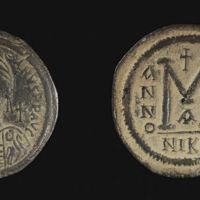
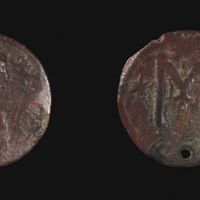
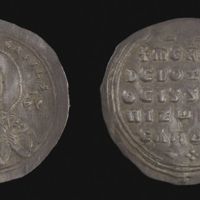
There were multiple variations of the invocation of the holy in coins, as exemplified below.