Browse Items (68 total)
Sort by:
Glass Coin Weight
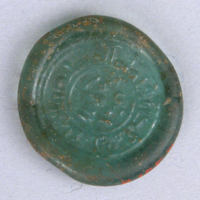
Glass coin weights were used in the Byzantine and Islamic worlds to monitor the weight of coins, assuring quality of the currency. This coin weight is attributed to Egypt and it features an Arabic inscription arranged in concentric circles. The outer…
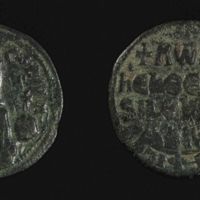
Follis of Leo VI, Constantinople
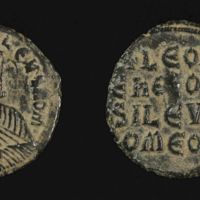
Coin of a A Byzantine Ruler
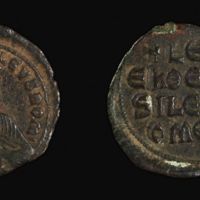

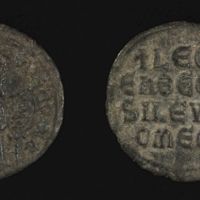
Follis of Justinian I, Nicomedia
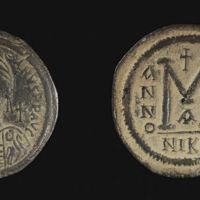
This is an Early Byzantine struck bronze coin depicting emperor Justinian I holding the cross. Like countless other rulers, he justifies his power by posing himself with a holy object. This coin dates to the sixth century, so we know that the…
Follis of Justinian I, Kyzikos
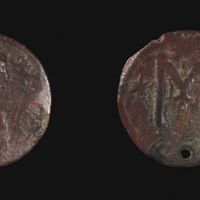
This coin was produced between 498 and 518 C.E. and it is holed like the coin of Romanos IV (which came much later in the 11th century). Coins serving as amulets is not uncommon and we see this practice throughout the Middle Ages. On this coin, the…
Folio in the New Style
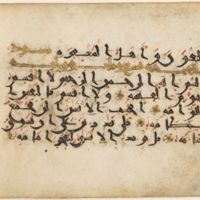
This folio shows what came after the Kufic style. Note that the letters are more curved and crammed.
Folio from the Blue Quran
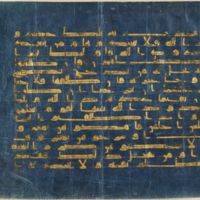
Pictured here is a page out of the famous Blue Quran, which is dispersed all around the world and which the Harvard Art Museum is lucky to have a fragment of. The gold text is also in the Kufic style.