Browse Items (68 total)
Sort by:
Theophylaktos protospatharios epi tou Chrysotriklinou and asekretis (tenth/eleventh century)
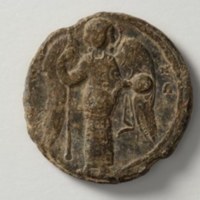
A lead seal of St. Michael holding the labarum and globus. On the obverse an inscription common to most kommerkiarios seal
Follis of Leo VI, Constantinople
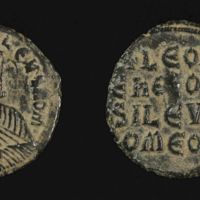
Coin of a A Byzantine Ruler
Damianos imperial spatharios and kommerkiarios of Abydos and Salonica (tenth century)
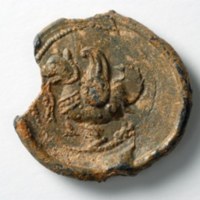
A Byzantine Lead seal with a depiction of a griffin facing left on the obverse. On the reverse is a prayer commonly found on all lead seals belonging to the kommerkiarios.
Damianos imperial spatharios and kommerkiarios of Abydos and Salonica (tenth century)
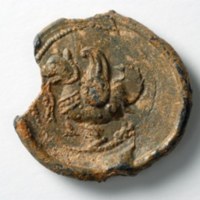
A Byzantine Lead seal with a depiction of a griffin facing left on the obverse. On the reverse is a prayer commonly found on all lead seals belonging to the kommerkiarios.
Demetrios, imperial spatharokandidatos and kommerkiarios of Seleukeia (tenth century)
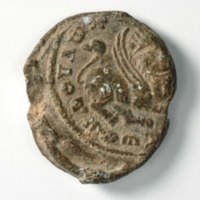
A 10th century Byzantine Lead Seal created by an individual named Demetrios. On the obverse of the seal is a winged lion with its head turned three-quarters to the front. On the reverse of the seal is a personal incantation.
Photios imperial protospatharios epi ton oikeiakon and kommerkiarios of Chaldia (tenth century)
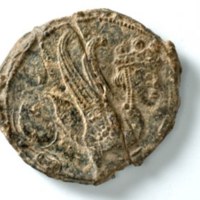
A Byzantine Lead Seal with a Sphinx facing right on the obverse five lines which can be read as
Seal of N., (proto?)spatharios and kommerkiarios of Thessalonica (X c.)
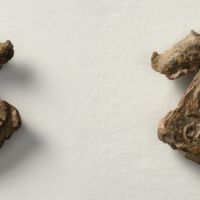
A Lead Seal with the depiction of a walking griffin on the obverse. On the reverse of the seal an inscription of five lines which can be read as "Lord, help your servant N., protospatharios and kommerkiarios of Thessalonica"
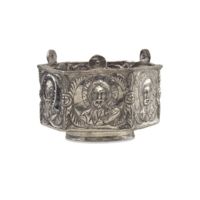
Tetarteron of Constantine X and Romanos IV
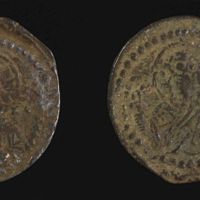
It seems that different dies were mixed to create this bronze Byzantine tetarteron. The obverse, which depicts the Virgin, seems to use the same die as a coin from a coin of Constantine X. The image of Christ on the reverse appears to have been…
Anonymous Follis
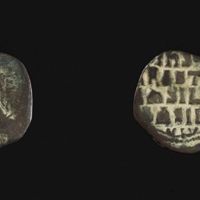
This struck bronze follis has been clipped so much that much of the inscription is gone. The minting location and ruler of the time are uncertain– the information may have originally been in the margins. We can tell that the figure depicted is Christ…