Browse Items (68 total)
Sort by:
"Toenail" Hoard
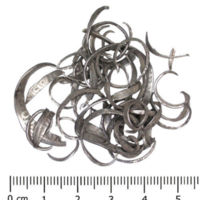
This is a pile of clippings taken from silver coins in 16th-17th century England. The original coins were of Elizabeth I, James I , and Charles I and were thus over 90% fine metal. Clippings of this sort were made to be melted back down, often into…
10th Century Samanid Coin
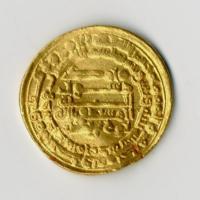
This Islamic coin was minted just as the Samanids conquered al-Muhammadiya (in modern Iran). The central inscription names the propher Muhammad as well as the Samanid rule Nuḥ bin Nasr. The inner circular margin lists the date and location of the…
14th Century Handheld Die
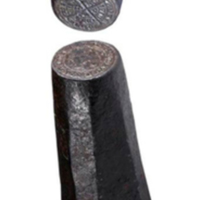
Dies like this one were used to make the designs seen on Medieval coins. A metal blank would be placed between the upper and lower dies, then the upper one would be struck with a hammer. This would leave a design imprinted in the metal disc, creating…
Abbasid Coin #1
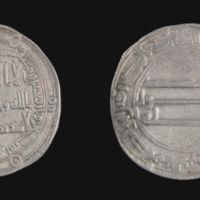
This coin circulated under the Abbasid reign and features a Kufic inscription. Note the extremely elongated letters.
Abbasid Coin #2
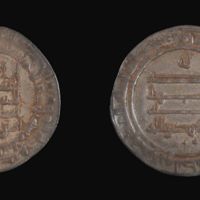
This coin circulated under later Abbasid rule and features a Kufic inscription.
Anonymous Follis
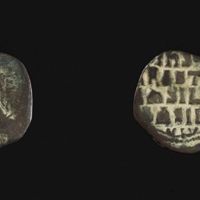
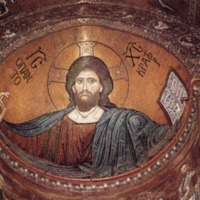
This struck bronze follis has been clipped so much that much of the inscription is gone. The minting location and ruler of the time are uncertain– the information may have originally been in the margins. We can tell that the figure depicted is Christ…
Badly Overstruck Coin
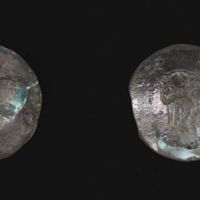
The coin is an example of one that has been "overstruck." This is when an existing coin instead of a blank is used to strike a new coin. Often times this results in layered and unrecognizable designs. In this particular coin the figure of Manuel I…
Birmingham Quran
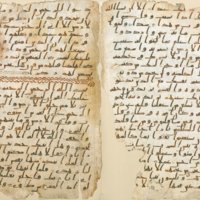
Two folios from one of the oldest Qurans on record.
Bowl #1
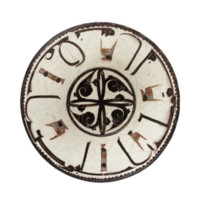
This bowl features a circle of text surrounding animals.