Browse Items (68 total)
Sort by:
Follis of Justinian I, Kyzikos
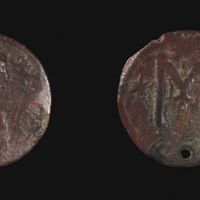
This coin was produced between 498 and 518 C.E. and it is holed like the coin of Romanos IV (which came much later in the 11th century). Coins serving as amulets is not uncommon and we see this practice throughout the Middle Ages. On this coin, the…
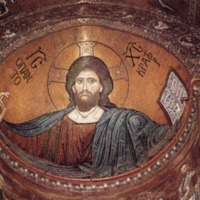
The Assumption of the Virgin
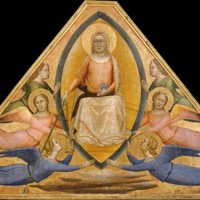
This is a fourteenth-century panel painting by Bernardo Daddi of Florence. It is part of an altarpiece that was located in the northern Italian Cathedral of Prato. It depicts the Virgin Mary giving her girdle to St. Thomas.
Saint Anthony of Padua
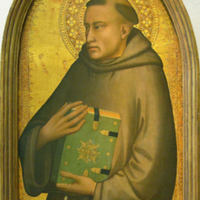
This is a fourteenth-century panel painting by Maso di Banco of Florence. It formed the right side of an altarpiece that was located in a Franciscan church. It depicts the Franciscan St. Anthony staring at what would be the central panel of the…
Saint Clare
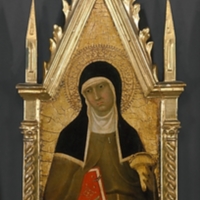
This is a fourteenth-century panel painting by Lippo Memmi of Siena. It formed part of an altarpiece that was located in the church of San Francesco in San Gimignano. It depicts St. Clare holding a lamp in one hand, which was her symbol.
Folio from another Kufic Quran
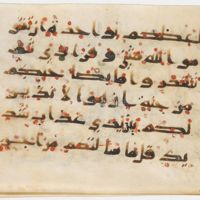
This folio comes from another Kufic Quran. Notice the abundant red dots and black tick marks indicating vowels, and the odd diagonal slant of the text as a whole.
Folio from an Eastern Kufic Quran
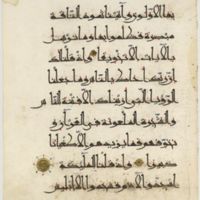
This folio comes from a Quran in the Eastern Kufic style. Notice the emphasis on vertical rather than horizontal elongation.
Folio from the Blue Quran
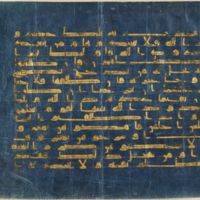
Pictured here is a page out of the famous Blue Quran, which is dispersed all around the world and which the Harvard Art Museum is lucky to have a fragment of. The gold text is also in the Kufic style.
Miliaresion of Basil II, Constantinople
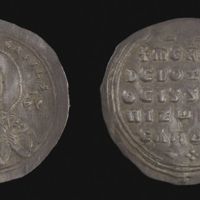
Produced in 989 under the rule of Basil II, this struck silver coin is devoid of any depiction of the ruler. The emperor is honored in the text, but the only image is of the Virgin and Child. The population of those who could read the text would have…
14th Century Handheld Die
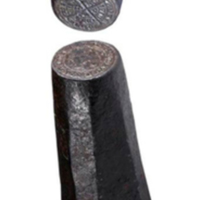
Dies like this one were used to make the designs seen on Medieval coins. A metal blank would be placed between the upper and lower dies, then the upper one would be struck with a hammer. This would leave a design imprinted in the metal disc, creating…