Browse Exhibits (16 total)
Religious Invocation in the Medieval World
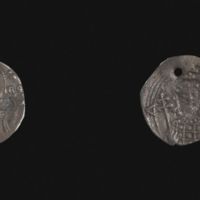
This exhibit presents a selection of medieval objects containing religious invocations, ranging from an imperial seal to a page from the Qur'an. The diversity of objects in the exhibit serves to illustrate an important point: religion was a ubiquitous and constant presence in medieval life. There are many reasons why the holy was invoked in such a large number of objects from the Middle Ages. First, religion, in particular Christianity and Islam, was vital to maintaining the power of the ruling class. Rulers claimed a special relationship with God, deriving their power not only from their lineage but from a divine right. In addition, the large attendance at religious services and events ensured that the holy was a constant presence in the minds of the populace. In the West, a strong monastic tradition allowed for the copying of religious works, as well as the dissemination of religious information.
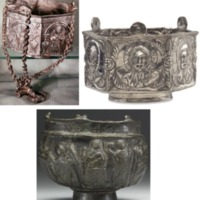
The ubiquity of religious invocation is demonstrated, rather differently, by each object in this collection. The coins show religion in relation to power, expressing the divine right of rulers described above. The seal offers a direct invocation to the Lord, demonstrating the perceived power of God. The censer serves as a means for invocation by providing the smoke to carry a person's prayers to heaven and imagery meant to expose people to Christ so that they may come to worship and venerate him. The Man of Sorrows serves as a visual representation of the suffering of Christ. It evokes humility from the viewer and urges the viewer to worship, as Christ died for his/her sins and thus should be venerated. Finally, the page from the Qur'an offers perhaps the most direct example of religious invocation, with its calligraphic style meant to honor and praise the Lord. The page serves to connect the reader with the word of God and to promote introspection, as to develop a deeper understanding of oneself by way of scriptural interpretation.
Iconography in the Byzantine Empire
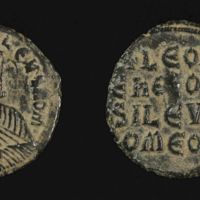
Many aspects of Byzantine life can be revealed through the objects created and used during the Byzantine era. Understanding the relics used as objects in the Byzantine period is essential to understanding the culture, beliefs, and principles of the people who lived during this time. By closely observing common objects used in institutions of the Byzantine empire, one can better appreciate the society of the Byzantine people.
For example, take a common lead seal created by a government official known as the Kommerkiarios. The use of seals in the Byzantine Empire served a dual purpose: to to verify and secure the contents which it held. Byzantine seals were used to tress private communications and to authenticated the documents which the seal contained. The creation of the engraving on the seal would have been something personal to the individual who had the seal made, however today, the elements contained on these artifactual objects reveal to us aspects of the Byzantine world, particularly aspects of its martial, clerical and civil institutions. The seals, as stated earlier, provide central indication of an individual’s career as well as their presence and role in the Byzantine World during that time. The synoptic and identical choice of invocations reveal a religious society heavily defined by Christianity as well as trust in a divine intercessory powers. However, iconography on seals ranged from religious to secular. Religious images include images of the Virgin and Christ, various saints, and narratives from the Old and New Testament, as well as the Cross. More secular images includes aspects of Byzantine life, such as sports, as well as real and mythical creatures, thus revealing aspects of the Byzantine empire still rooted in ancient Greek and Roman culture.
The choice of inscriptions as well as their images reflect beliefs, principles, and perspectives of people of the Byzantine World who but for the existence of their seals would be lost forever. This is not just the case with seals though: artifacts such as coins, weights and other relics reveal aspects of Byzantine society as well. In this exhibit, one will see seals and other objects associated with Kommerkiarios, ,a fiscal position responsible for collecting taxes in the Byzantine Empire, and observe the invocations and iconography reflecting the culture and beliefs seen in a mercantile institution of the Byzantine World.
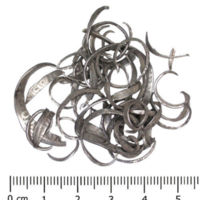
The Evolution of the Man of Sorrows in Medieval Byzantium and Europe
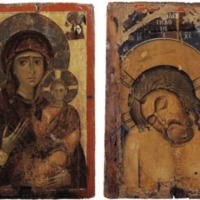
The world of the medieval is a vast one, both geographically and temporally. It contains many traditions, many rulers, and many ways of life. One natural question that arises, then, is how much interplay was there between the various cultures of the Middle Ages? On the one hand, long-distance traveling was certainly not the norm, and local identities generally seem to have been strong and well preserved. Yet, one can also point to countless examples of cultural exchange. From pilgrimages to crusades to traveling scholars, many possible paths were open to allow for the diffusion of ideas. Thus, attempting to answer the question posed above quickly turns into a dizzying and overwhelming affair. Is there any way of getting a more visceral, even intuitive, feel for the extent and limitations of medieval cultural interplay? This exhibit seeks to do just this by employing one image, that of the Man of Sorrows, as an illustrative example of the geographic and temporal evolution of ideas in the Middle Ages. As a distinctly Christian image its spread is limited to Christian lands, but even so this exhibit will help us to gain a sense of what it takes to transmit an idea through different societies and through different centuries.
Beyond the limitation presented above, the Man of Sorrows image is particularly well-suited to this exhibit’s goal. It had a wide geographic spread, originating in the Byzantine world and reaching to the northern parts of Europe. Intriguingly, the mechanisms of the image’s transcultural movement can oftentimes be identified, partly because its unique depiction of Christ is not likely to have been independently created in different Christian regions. One problem with tracing many other unusual images is that they are limited in quantity (at least, in the quantity that has been preserved to the present day). However, the Man of Sorrows is found in abundance. Finally, it is a valuable image for this exhibit to focus on because it clearly demonstrates one central theme of medieval cultural diffusion: societies may have been willing to adopt “foreign” concepts, but they rarely did so without making such concepts their own. Hence, for instance, we can clearly differentiate Italian Man of Sorrows images from northern European equivalents on the basis of their material and iconographic natures.
This exhibit consists of three parts. First, it presents the origins of the Man of Sorrows image in the Byzantine Empire. Next, the exhibit moves to the Italian peninsula, where one can see a particularly interesting cultural interplay in the adoption of the Man of Sorrows. Finally, the exhibit ends in central and northern Europe, far away from the image’s beginnings but surprisingly faithful to its key attributes.
The Kufic Script: Form Follows Function
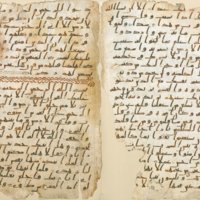
The Islamic Empire, perhaps the world’s predominant power during the Middle Ages, came into being upon the death of Muhammed in 632 and the rapid Arab conquests made thereafter. This empire gave the world a new religion, Islam. The language of this new religion was Arabic, and one of its earliest forms was known as the Kufic.
While Arabic as a spoken language dates back to centuries before Islam, Arabic as a written language does not. Only a handful of pre-Islamic Arabic artifacts have been found, and it wasn’t until the Islamic era and the spread of the Quran that the written form became ubiquitous (1). In the same sense that transcribing the Quran necessitated the development of Arabic script in general, it can be said that inscriptions, be they on monuments, coins, or ceramics, gave rise to the Kufic style of writing in particular. The Kufic style, known for its horizontal letters that could be stretched to an arbitrary degree, gave artists remarkable flexibility in design. In addition to this, the simplistic, angular nature of the letters allowed for ease of inscription.
This exhibit will explore manuscripts, monuments, coins, and ceramics. In doing so, it will showcase how Kufic form followed decorative function.
(1) "Arabic Alphabet." Encyclopedia Britannica Online. Encyclopedia Britannica, 18 Aug. 2016. Web. 11 Dec. 2016.